Avocad Blog
Social Media Ad Sizes 2026: The Practical Platform Guide
Updated social ad size guidance for 2026 with platform-ready dimensions, aspect ratios, and production rules for faster multi-channel launches.

Written by
Zihaan Mohamed- Reading time
- 4 mins
- Published
- April 26, 2026
- Last verified
- April 26, 2026
Incorrect ad sizes waste budget in quiet ways: poor crops, unreadable text, weak CTA visibility, and lower placement eligibility.
This guide gives you a practical 2026 sizing system you can use in real production workflows.
Important: platform specs change. Re-validate in-platform before final export.
The Core Production Strategy
Do not design from scratch for every placement.
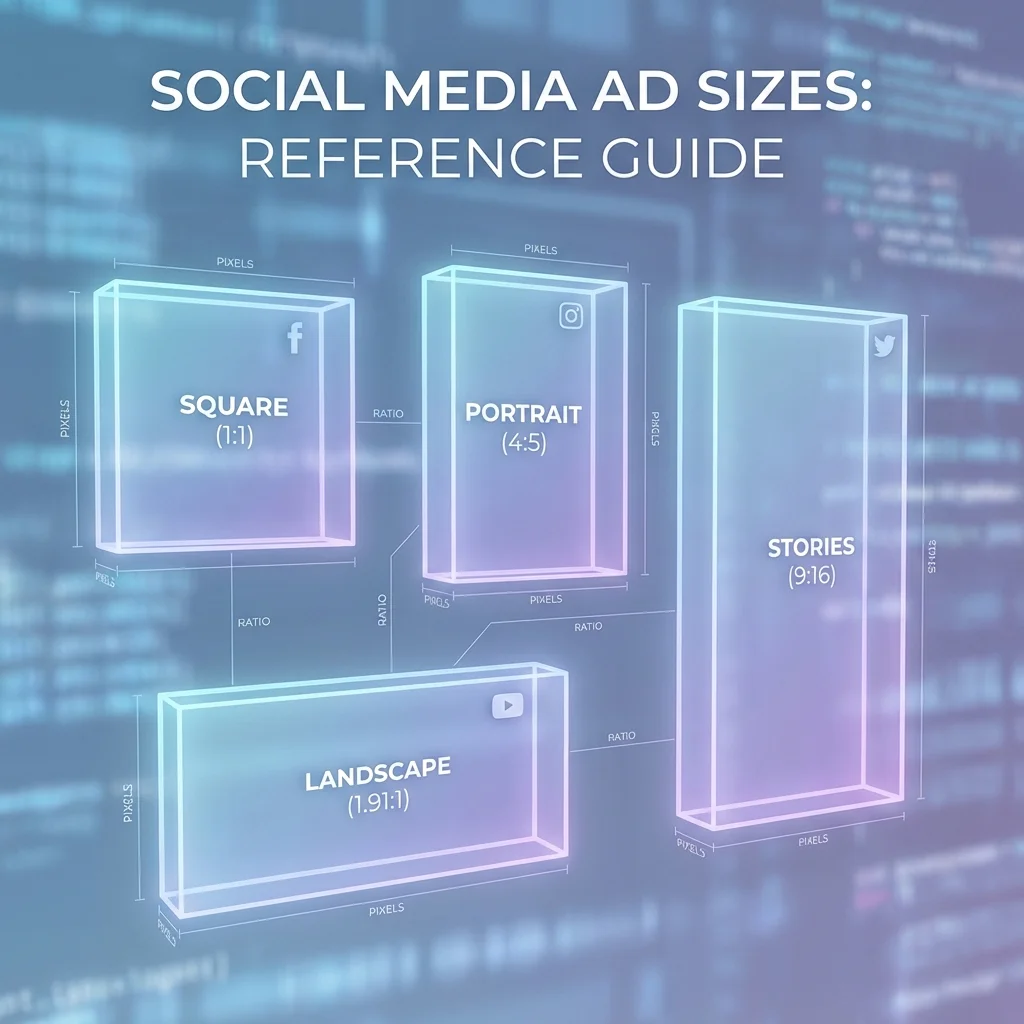
Create a small set of master canvases, then adapt:
1080 x 1080(1:1)1080 x 1350(4:5)1080 x 1920(9:16)1920 x 1080(16:9)
This covers most paid social and video contexts with minimal rework.
Google Display and YouTube
Google Display (uploaded image ads)
From Google Ads uploaded display specs:
- Formats: GIF, JPG, PNG
- Max size: 150 KB for image ads
- Common sizes include:
300 x 250,336 x 280,728 x 90,970 x 250,300 x 600,320 x 50,320 x 100
YouTube video ad specs (Google Ads)
Google recommends HD assets and accepts horizontal, vertical, and square inputs:
- Recommended HD examples:
1920 x 1080,1080 x 1920,1080 x 1080 - Also accepts lower minimums like
1280 x 720(horizontal) and720 x 1280(vertical) - Use safe-zone-aware composition because overlays and CTA elements can appear in different screen positions
LinkedIn Specs (Sponsored Content)
Single image ads
LinkedIn currently supports and recommends:
- Landscape: 1.91:1, commonly
1200 x 628 - Square: 1:1, commonly
1200 x 1200 - Vertical: 4:5, commonly
720 x 900(mobile-leaning)
Additional limits include JPG/PNG/GIF and up to 5 MB image file size.
Video ads
LinkedIn video guidance currently includes:
- Aspect ratios: 16:9, 1:1, 4:5, and 9:16
- Length: 3 seconds to 30 minutes (15 to 30 seconds often recommended for broad placement eligibility)
- File format: MP4
- File size: 75 KB to 500 MB
TikTok In-Feed Auction Ads
TikTok's in-feed auction specs currently support:
- Vertical (recommended): 9:16, minimum
540 x 960 - Horizontal: 16:9, minimum
960 x 540 - Square: 1:1, minimum
640 x 640 - Formats:
.mp4,.mov,.mpeg,.3gp,.avi - Max file size: 500 MB
- Video duration: up to 10 minutes
For most performance campaigns, vertical creative should be your default.
Pinterest Ad Specs
Pinterest standard image ads currently recommend:
- 2:3 aspect ratio, typically
1000 x 1500 - Pins taller than 2:3 can be cut off in feed previews
Pinterest video guidance in business specs includes:
- Vertical-friendly formats, including 9:16 and full-bleed guidance at
1080 x 1920 - Maximum duration up to 5 minutes
If your creative has important text, test feed previews before scaling.
Meta Platforms (Facebook + Instagram): Practical Setup
Meta ad surfaces evolve often and can be placement-specific. Use Ads Manager previews as final authority before launch.
Operationally, most teams are safest with these working masters:
- 1:1 for feed portability
- 4:5 for mobile feed emphasis
- 9:16 for Stories/Reels contexts
Instagram help content for boosting Reels indicates full-screen vertical (9:16) behavior and duration constraints for boosted Reels. Story surfaces also require safe-zone discipline so UI elements do not cover key copy and CTA.
"No-Crop" Creative System for Teams
Use this rule set in your design workflow:
- Keep headline and offer in the center safe area
- Avoid placing critical text at extreme top or bottom edges
- Export per placement when possible, not one file for all placements
- QA every asset in native preview before publishing
If one master file must be reused, prioritize the 4:5 and 9:16 adaptations first.
Recommended Export Checklist
Before launch, verify:
- Correct dimensions and aspect ratio
- Correct file format and size limits
- Readable text at mobile scale
- No important elements covered by UI overlays
- Correct destination URL and tracking parameters
Specs compliance is basic quality control, not a growth strategy. But failing specs can block growth before it starts.
Production Workflow With Avocad
A practical weekly flow:
- Create one core concept
- Generate four master aspect-ratio outputs
- Adapt copy density by placement
- Run a quick QA pass in native previews
- Launch controlled A/B tests on message, not sizing
Use sizing to preserve clarity. Use testing to improve performance.
Related Guides
- The Complete A/B Testing Guide for Small Business Ads
- Writing Ad Copy That Converts: A Data-Driven Guide
- Product Photography Tips for Better AI-Generated Ads
Correct dimensions do not guarantee winning ads, but incorrect dimensions consistently hurt otherwise strong campaigns.